
The State of Online Booking in Singapore 2026
How Singapore consumers and service businesses book in 2026 — self-service, mobile-first, PayNow at booking, WhatsApp reminders, and owning your own page.
TL;DR
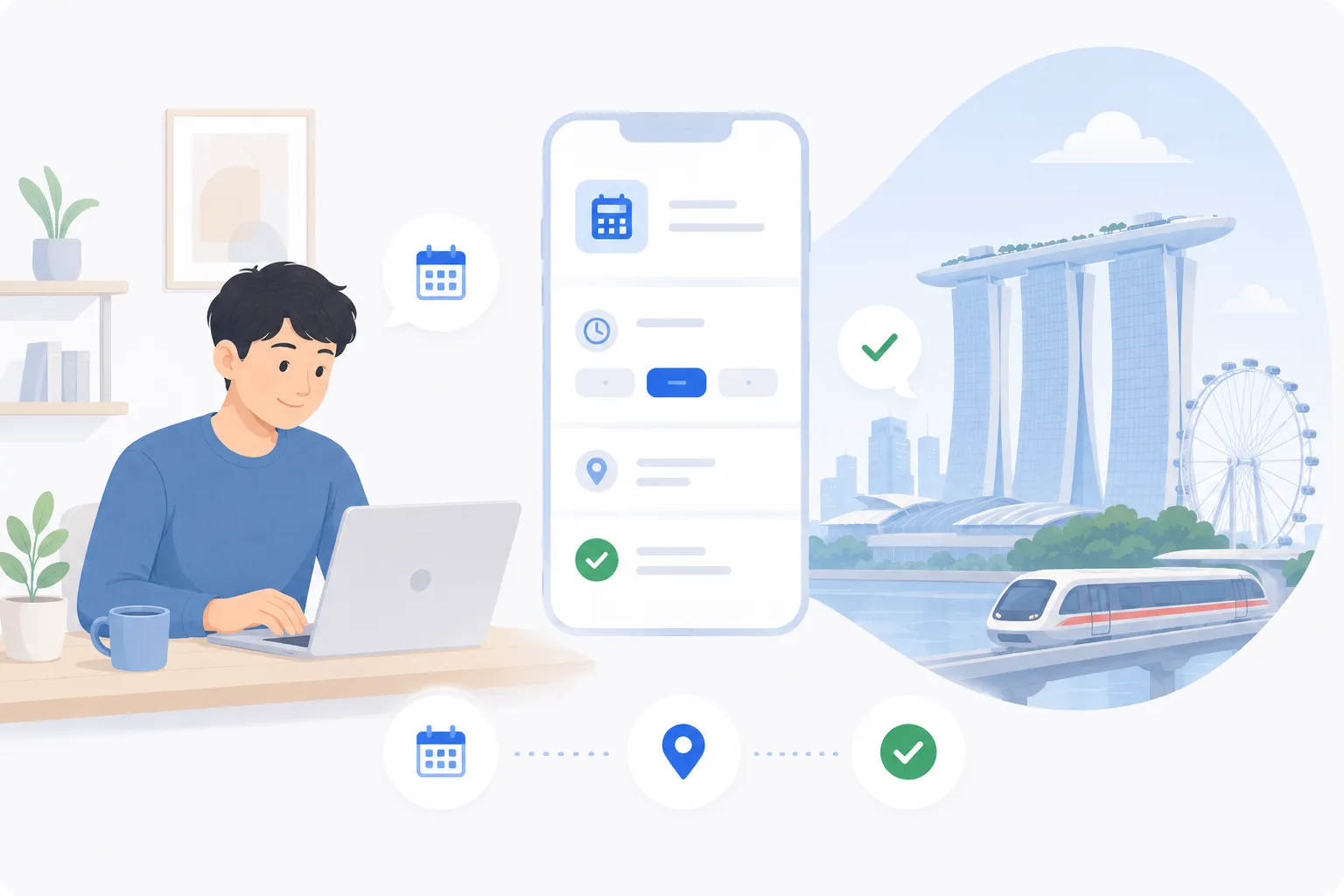
In 2026, Singapore customers expect to book a service the way they order food or hail a ride: on their phone, at any hour, with payment sorted and a confirmation in hand. Self-service is now the default, PayNow has made paying at booking normal, and WhatsApp has become the channel where reminders actually get read. Marketplaces still drive discovery, but more service businesses are choosing to own their booking page so they keep the customer, the data, and the margin. The throughline is simple: less friction, more certainty, and meeting customers on the channels they already use.
How Singapore books now
A few years ago, a phone call or a WhatsApp message to the front desk was a perfectly normal way to book a class, a treatment, or an appointment. It still happens. But the centre of gravity has moved. The same person who books a hawker meal, a grab car, and a movie ticket on their phone now expects to book your service the same way — and they are often doing it after dinner, not during your opening hours.
This is not a story about one dramatic new technology. It is a story about expectations catching up. The tools have been here for a while; what changed is that customers now assume they exist. A business that cannot be booked online at 11pm is, in the customer’s mind, simply harder to deal with than the one down the road that can.
Below are the trends shaping how Singapore books in 2026, and what each one means in practice for a service business.
Trend 1: Self-service is the default, not a nice-to-have
The biggest shift is also the quietest. Customers want to do it themselves. They want to see real availability, pick a slot, and walk away knowing it is confirmed — without waiting for someone to reply.
This matters most for the bookings that happen outside your working hours. Every “please call us during office hours” is a booking you might lose to a competitor whose page never closes. An online booking system that shows live availability and confirms instantly captures those evening and weekend intentions that a phone line cannot.
Self-service does not mean removing the human touch. It means reserving your team’s time for the conversations that genuinely need a person — a complicated first enquiry, a special request, a worried parent — instead of spending it on the routine “do you have a 3pm on Saturday?” exchanges that software handles better anyway.
A useful way to think about it:
| Customer moment | Old default | 2026 expectation |
|---|---|---|
| Wants to book | Calls or messages, waits for reply | Self-books on a page, confirmed on screen |
| Wants to pay | Pays on arrival | Pays or leaves a deposit at booking |
| Wants a reminder | Hopes to remember | Gets a WhatsApp the day before |
| Wants to reschedule | Calls during office hours | Reschedules from a link, anytime |
Trend 2: Mobile-first is the whole game
Almost every booking starts on a phone. That sounds obvious, but it has real consequences for what a good booking experience looks like. A page that is fiddly on mobile — tiny tap targets, a calendar that does not scroll cleanly, a form that asks for too much — quietly loses people who were ready to commit.
Mobile-first booking means the path from “I want this” to “it’s confirmed” is short and thumb-friendly. Fewer fields. A calendar that behaves on a small screen. No forced app download for a one-off booking — a web page the customer can open from a link is almost always the right call, with a dedicated app as an option for regulars, not a gate for newcomers.
The practical test is simple: can a customer book you from their phone, one-handed, on the MRT, in under a minute? If not, that is where the friction is.
Trend 3: PayNow has changed payment-at-booking
Paying when you book used to feel like a big ask in some sectors. Not anymore. PayNow has made instant, account-to-account payment so normal that customers barely think about it — and that has quietly rewired what happens at the moment of booking.
PayNow processed 1.2 billion transactions in Singapore last year, up 48% year-on-year (MAS, 2025). When paying is that frictionless, asking for payment or a deposit at booking stops feeling heavy-handed and starts feeling expected.
The business case is straightforward. A booking that is paid for, or backed by a deposit, is a booking the customer is far less likely to forget or casually drop. Collecting payment at the point of booking does two jobs at once: it improves cash flow and it dramatically reduces no-shows, because a slot someone has paid for carries real commitment. Offering both PayNow and card keeps it easy for everyone.
Trend 4: WhatsApp is the default comms channel
Email still has its place — receipts, records, anything the customer might need to dig up later. But for the message that actually needs to be seen, WhatsApp has won in Singapore.
WhatsApp open rates in Singapore exceed 90%. Set that against the reality that a large share of marketing and reminder emails are never opened at all, and the implication is hard to ignore: a reminder sent over WhatsApp is simply far more likely to land.
This is why automated reminders have moved from “we send an email the night before” to “the confirmation and the reminder go to WhatsApp, where the customer already lives.” A short, friendly message the day before — with an easy way to reschedule rather than just not show up — is one of the highest-leverage things a service business can do. It is cheap, it is automatic, and it directly protects revenue. Industries that run on tight, recurring schedules feel this most; our look at running a wellness centre booking system in Singapore digs into how reminders and confirmations keep a busy timetable from leaking.
Trend 5: The shift from marketplaces to owning your page
For a long time, the default growth move was to list on a marketplace and let it bring the customers. Marketplaces are genuinely good at discovery, and they still are. But the 2026 mood is more clear-eyed about the trade-off.
When a booking comes through a marketplace, the marketplace owns the relationship. It owns the customer’s data, it sets the rules, and it takes a cut of every transaction — including the repeat bookings from customers who already know and trust you. You are renting access to your own regulars.
The shift is not “abandon marketplaces.” It is “do not let them be your only front door.” More businesses are pairing marketplace reach with an owned booking page that repeat customers come to directly. Discovery happens on the marketplace; loyalty and margin live on your own page.
| Marketplace booking | Your own booking page | |
|---|---|---|
| Discovery | Strong — built-in audience | You drive it (search, social, referrals) |
| Customer relationship | Owned by the marketplace | Owned by you |
| Data | Limited, shared on their terms | Yours, used responsibly under PDPA |
| Cost per booking | Commission on every booking | Flat platform cost, no per-booking cut |
| Best used for | Reaching new customers | Repeat bookings and loyalty |
The honest position: use marketplaces to be found, and own your page so the people who already love you do not cost you a commission every time they come back.
Trend 6: Instant confirmation and reminders are now table stakes
Tie the previous trends together and you arrive at the rising baseline for 2026. Customers expect to book themselves, pay easily, get confirmed on the spot, and be reminded before the day arrives. None of that is a premium feature anymore. It is the floor.
“We will get back to you to confirm” now reads as a small red flag. Any gap between booking and confirmation invites doubt, double-bookings, and the customer quietly booking elsewhere to be safe. A real-time calendar that confirms the moment someone books — and then follows up with a reminder — closes that gap entirely.
A typical clinic or studio that gets this right tends to see the same pattern: fewer no-shows, less time spent on the phone, and a front desk that can focus on people in the room rather than the queue of “is 3pm free?” messages.
What this means for a service business in 2026
You do not need to chase every trend at once. The practical priorities, in order:
- Put a real booking page in front of customers that shows live availability and confirms instantly, optimised for phones first.
- Take payment or a deposit at booking, with PayNow and card, so commitment is built in and no-shows fall.
- Move reminders to WhatsApp, automated, with an easy reschedule link rather than a dead end.
- Own the relationship. Use marketplaces for reach, but make your own page the home for repeat customers.
- Handle data responsibly. Capture consent at booking, collect only what you need, and keep it securely — the PDPC expects accountability, especially when you use a vendor.
The businesses that feel modern in 2026 are not the ones with the flashiest tech. They are the ones that removed friction: easy to book, easy to pay, impossible to forget. That is what BooknGo is built to do — a mobile-first booking page, PayNow and card payments at booking, WhatsApp and SMS reminders, and your customer data kept where it belongs, with you.
See how a self-service booking page, PayNow payments, and WhatsApp reminders work together for your business. Request a demo →
Frequently asked questions
Do Singapore customers still want to call a business to book?
Fewer of them do. The expectation in 2026 is self-service: a customer wants to see what is available and confirm a slot themselves, often outside office hours. Phone bookings still matter for complex or first-time enquiries, but a business that only takes bookings by phone loses the customers who are ready to book at 11pm.
Why does PayNow matter for online booking?
PayNow is now a default way to pay in Singapore, so customers expect to settle at the moment of booking rather than on arrival. Taking payment or a deposit at booking reduces no-shows and removes the awkward chase later. PayNow processed 1.2 billion transactions in Singapore last year, up 48% year-on-year (MAS, 2025), which tells you how normal pay-at-booking has become.
Is WhatsApp better than SMS or email for reminders?
For most Singapore audiences, yes. WhatsApp open rates in Singapore exceed 90%, so a reminder there is far more likely to be seen than an email. The practical answer is to meet customers where they already are — many businesses send the confirmation and reminder over WhatsApp and keep email for receipts and records.
Should I rely on a marketplace or build my own booking page?
Marketplaces can bring discovery, but they own the customer relationship, the data, and a cut of every booking. The 2026 shift is towards owning your own booking page so repeat customers come straight to you. Most businesses use both: a marketplace for reach and an owned page for loyalty and margin.
What counts as 'instant confirmation' and why does it matter?
Instant confirmation means the customer sees their slot confirmed on screen the moment they book, with a message to follow, rather than 'we will get back to you'. It matters because any gap invites doubt and double-booking. A real-time calendar that confirms immediately is now an expectation, not a premium feature.
Is taking payment and personal data online PDPA-compliant?
It can be, if you handle it properly. Under the PDPA you should collect consent at the point of booking, only gather what you need, keep it securely, and not hold it longer than necessary. The PDPC expects accountability when you use a vendor, so choose a booking platform that supports consent capture and sensible retention.
Related articles
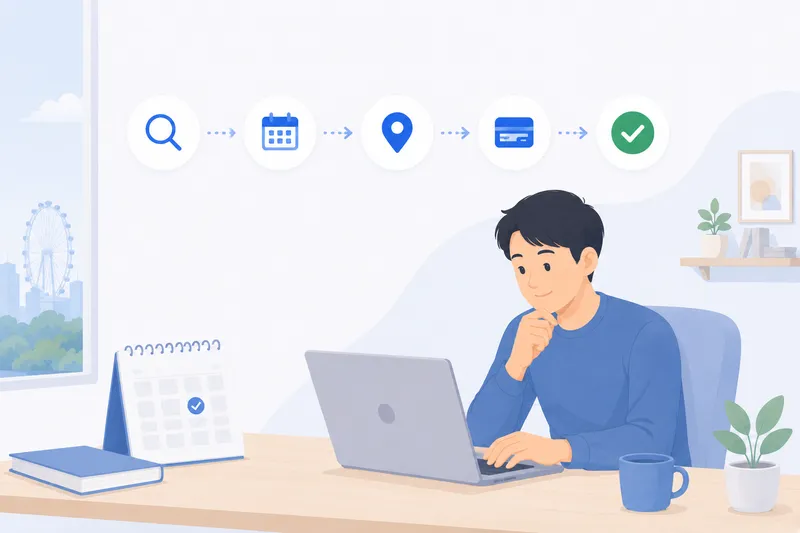
Moving Your Bookings Online in Singapore: A Step-by-Step Guide for Service Businesses
A practical, vendor-neutral walkthrough for Singapore clinics, studios and tuition centres moving from phone and WhatsApp bookings to online self-service.
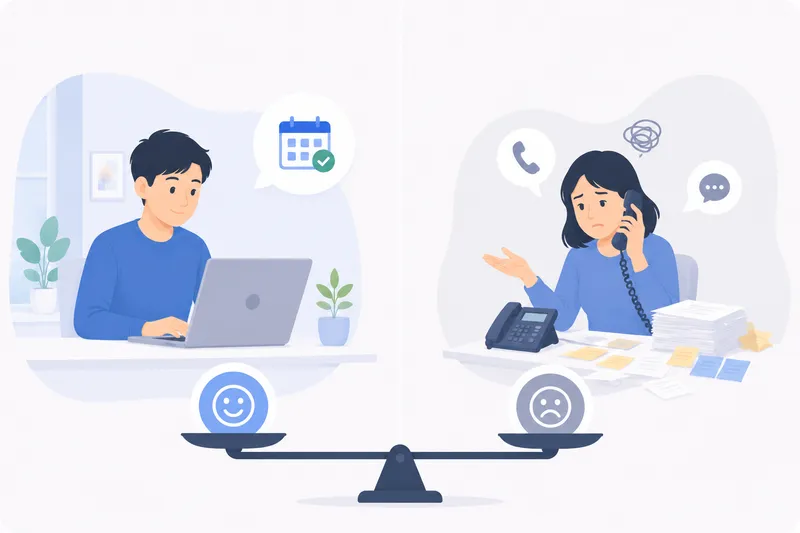
Online Booking vs Phone & DM Bookings: The Real Cost (Singapore)
An honest cost comparison of taking bookings by phone, WhatsApp and walk-in versus a 24/7 online booking page for Singapore service businesses.
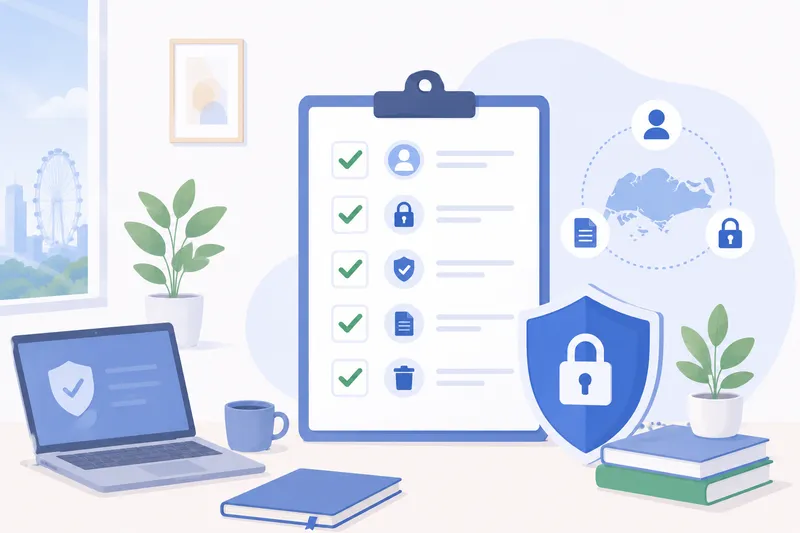
PDPA Checklist for Appointment-Based Businesses in Singapore
A plain-English PDPA checklist for Singapore clinics, studios, tuition centres and salons that take bookings and hold customer data, with a practical table.
Ready to fill every slot?
See how BooknGo keeps your calendar full and your admin on autopilot.