
The State of Online Booking in 2026
How consumers and service businesses book in 2026: self-service, mobile-first, messaging reminders, pay-at-booking, and owning your own page.
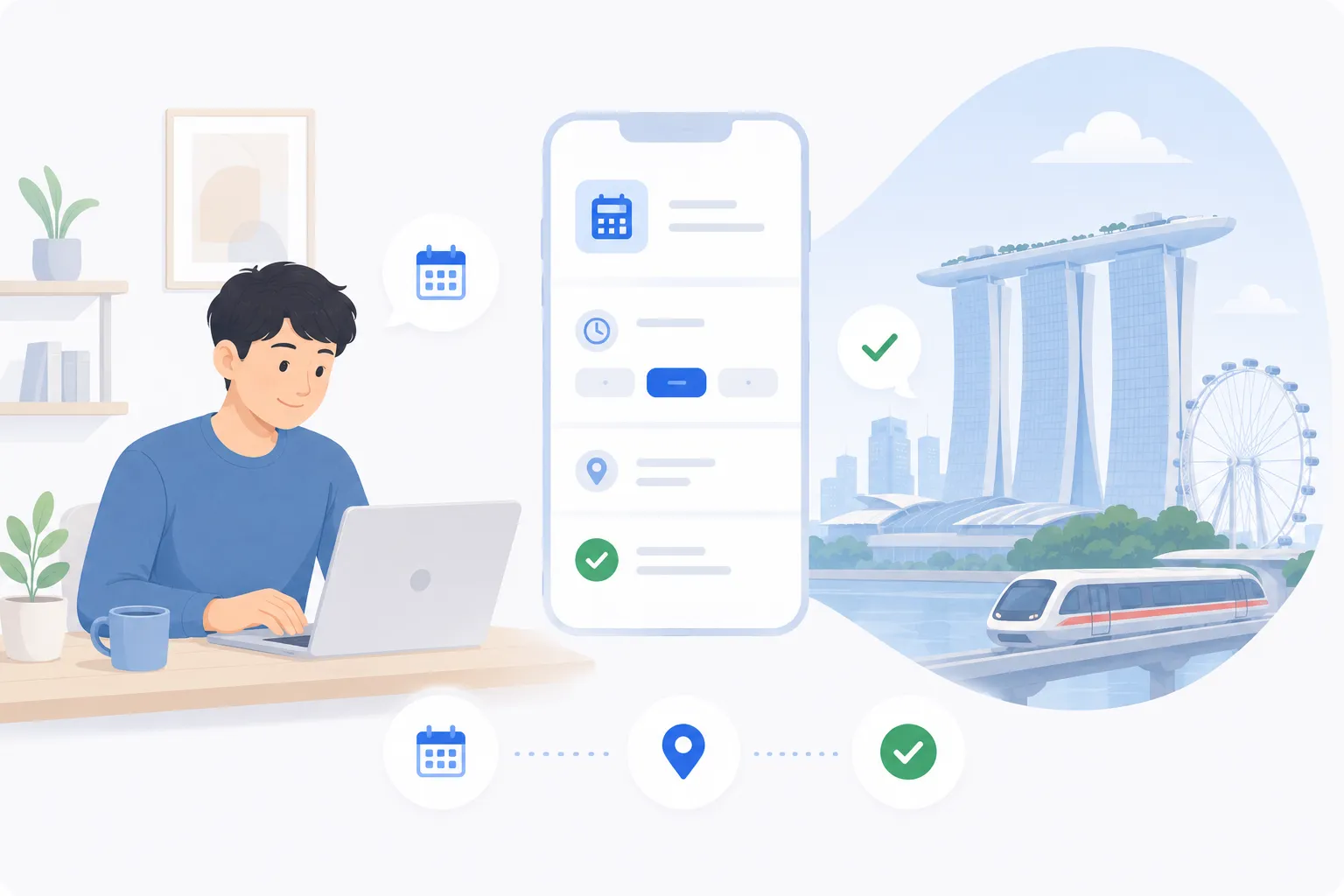
TL;DR
In 2026, booking a service is something customers expect to do themselves, on a phone, at any hour, with an instant confirmation. Reminders increasingly land in a messaging app rather than an inbox, and payment or a deposit is often taken at the moment of booking. The bigger shift is strategic: a growing share of service businesses are moving away from renting attention on marketplaces and towards owning their own booking page and customer relationship. The businesses that win are the ones that make booking effortless, confirm instantly, and quietly cut no-shows along the way.
The default has flipped to self-service
Not long ago, booking a haircut, a class or a clinic appointment meant calling during opening hours, leaving a message, or trading messages back and forth until a slot was agreed. In 2026, that flow feels like friction. Most customers now expect to see real availability and book the slot themselves, without speaking to anyone.
The change runs deeper than convenience. People increasingly book outside business hours, often late in the evening or first thing in the morning, precisely when no one is answering the phone. A business that can only take bookings while the front desk is staffed is invisible for a large part of the week. Self-service booking that runs around the clock captures demand that used to quietly disappear.
This is why a dedicated online booking system has shifted from a nice-to-have to the front door of the business. It is no longer a digital version of the appointment book; it is the place where the customer relationship begins.
Mobile-first is no longer a phrase, it is the whole experience
For most service businesses, the majority of bookings now start and finish on a phone. That has consequences for how a booking flow should be designed. A layout that technically works on mobile is not enough; the experience has to be built for a thumb, on a small screen, in a few seconds.
In practice, mobile-first booking in 2026 means:
| Expectation | What it looks like in practice |
|---|---|
| No app download | Booking works in the browser, from a link, with nothing to install |
| Few taps to confirm | Pick a service, pick a time, pay, done — without long forms |
| Real-time availability | The slots shown are the slots actually open, with no double-booking |
| Instant confirmation | A clear, immediate “you’re booked” rather than “we’ll get back to you” |
| Fits the channel | The booking link works from a bio, a message, a map listing or an ad |
The businesses that get this right treat the booking page like a checkout: every extra field, every unclear step, every spinner is a chance for the customer to give up. The goal is for a first-time visitor to go from “I want this” to a confirmed booking before they have time to reconsider.
Reminders moved into the messaging apps
Email is not dead, but for time-sensitive reminders it is fading. Inboxes are crowded, promotional filters are aggressive, and a reminder that sits unread until after the appointment is worse than no reminder at all. Messaging apps and SMS have become the default for anything the customer genuinely needs to see, because messages are opened far sooner and far more reliably.
The pattern that is becoming standard looks like this: an instant confirmation when the booking is made, a reminder a day or two before, and a final nudge on the morning of the appointment, all in the channel the customer already checks constantly. Email is kept for the things that suit it, such as receipts, longer updates and newsletters.
Done well, automated reminders are not just polite, they are one of the most direct levers a business has on revenue, because every reminder that prevents a forgotten appointment is a slot that gets used instead of wasted.
Payment is moving to the point of booking
One of the clearest shifts of recent years is when money changes hands. The old default was to provide the service first and collect payment afterwards. Increasingly, businesses take payment, or at least a deposit, at the moment of booking.
There are good reasons this is becoming normal:
- It filters out casual no-shows. A booking that costs nothing to make is easy to abandon. A small deposit changes the psychology entirely.
- It smooths cash flow. Revenue is recognised when the slot is reserved, not days or weeks later.
- It removes an awkward step. No fumbling for a card at the end of a visit, no chasing unpaid invoices.
- It signals commitment on both sides. A paid booking is a real booking.
The friction that used to make this hard has largely disappeared. Instant payments and digital wallets let a customer pay in a couple of taps on their phone, which means asking for payment at booking no longer costs you the booking. Pairing booking with online payment is now one of the simplest ways to protect both your calendar and your cash flow, especially when combined with sensible, clearly communicated cancellation windows so customers still feel they have flexibility.
Owning the relationship beats renting attention
The most important shift in 2026 is strategic rather than technical. For years, the easy answer to “how do I get bookings” was to list on a marketplace and let the platform send customers your way. That still brings volume, but more business owners are noticing what it costs them.
On a marketplace, the platform owns the customer. It takes a cut of each booking, it controls the data, your competitors are one tap away, and a returning client who found you once still has to wade past everyone else to find you again. You are renting attention, and the rent keeps rising.
A growing share of service businesses are responding by owning their own booking page: a branded, direct place to book that they control. Marketplaces still have a role for discovery, but the strategy is shifting from “be findable on someone else’s platform” to “turn every customer into a direct, repeat relationship you own.”
| Marketplace-led | Own booking page | |
|---|---|---|
| Who owns the customer | The platform | You |
| Cost per booking | A cut of every booking | Your own flat tooling cost |
| Branding | The marketplace’s | Yours |
| Customer data | Limited or shared | Yours to keep |
| Repeat bookings | Compete again each time | Come straight back to you |
| Discovery of new clients | Strong | You drive it (ads, social, referrals) |
The pragmatic answer for most businesses is not “abandon marketplaces” but “stop letting them own the relationship.” Use them for reach if it pays, and funnel everyone towards a booking page you control, so the second visit, and every visit after, comes directly to you.
Instant confirmation and fewer no-shows are now table stakes
Customer expectations have quietly hardened. A booking that ends in “we will confirm shortly” now reads as a red flag, not reassurance. People expect to know, the instant they book, that the slot is theirs. Anything slower feels broken.
The same expectation applies to the whole no-show problem. Customers increasingly expect to be reminded, and to be able to reschedule themselves in a couple of taps rather than calling to cancel. Businesses that meet that expectation see fewer empty slots almost automatically, because most no-shows are not deliberate; they are friction, forgetfulness and the absence of a timely nudge.
Put together, the modern baseline looks like this: instant confirmation at booking, a reminder in a channel that actually gets read, easy self-service rescheduling, and a deposit that gives the customer a small reason to show up. None of these is exotic in 2026; they are simply what a well-run booking experience is expected to include. If your current setup still relies on phone tag and manual confirmations, the gap to that baseline is exactly where revenue is leaking, and closing it is the heart of any sensible plan to modernise how you take bookings. Our guide to reducing no-shows and last-minute cancellations is a practical place to start..
What this means for your business in 2026
If you run an appointment-based business, the trends point to a short, practical checklist:
- Let customers book themselves, around the clock, without calling.
- Build the experience for a phone first, with as few taps as possible.
- Confirm instantly, every time.
- Send reminders where customers actually read them.
- Take a deposit or payment at booking, with fair cancellation terms.
- Funnel every customer towards a booking page you own, not one you rent.
None of these is a futuristic bet. They are simply the expectations customers already hold, applied consistently. The forward-looking part is what comes next, as more of this becomes automated and intelligent, but the foundation is available today, and the businesses that lay it now will be the ones that feel effortless to book in the years ahead.
Booking is your new front door — make it instant, mobile and yours. Request a demo →
Frequently asked questions
What does online booking look like in 2026?
Most customers now expect to book a service themselves, on a phone, at any hour, without calling or waiting for a reply. Confirmation is instant, reminders arrive in a messaging app, and payment or a deposit often happens at the point of booking rather than after the visit.
Why are businesses moving away from marketplaces?
Marketplaces bring volume but own the customer relationship, take a cut of each booking, and put your competitors one tap away. A growing share of service businesses now run their own booking page so repeat clients come straight to them and the data, branding and margins stay in-house.
Are messaging-app reminders really replacing email?
For time-sensitive reminders, increasingly yes. Messages are read far sooner and more reliably than email, which competes with crowded inboxes and spam filters. Many businesses now lead with a messaging reminder and keep email for receipts, newsletters and longer content.
Should I take payment or a deposit when someone books?
For most appointment-based businesses it helps. Asking for a deposit or full payment at booking filters out casual no-shows, smooths cash flow, and signals commitment, while still letting you offer flexible cancellation windows. Instant payments and digital wallets make it nearly frictionless on mobile.
Does online booking actually reduce no-shows?
It helps when paired with the right follow-up. Instant confirmation, automated reminders in the channel customers actually read, and easy self-service rescheduling together remove most of the friction that causes people to forget or quietly drop off.
Do I still need a website if I have a booking page?
A booking page and a website do different jobs, but the booking page is now the part that converts. Many small businesses lead with a clean, mobile-first booking page and treat the wider site as supporting content. The key is that booking is never more than a tap or two away.
Related articles
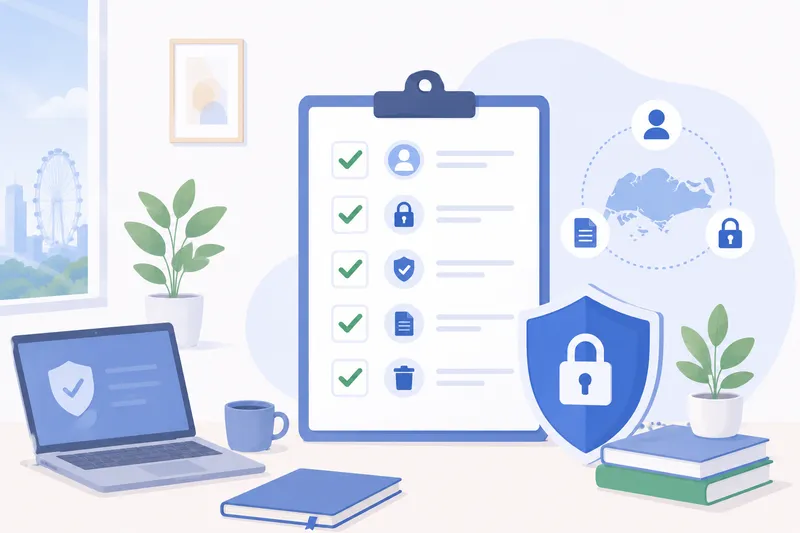
Client Data Protection: A Booking Checklist for Service Businesses
A practical, jurisdiction-neutral data-protection checklist for any service business that takes bookings and holds client contact and payment details.
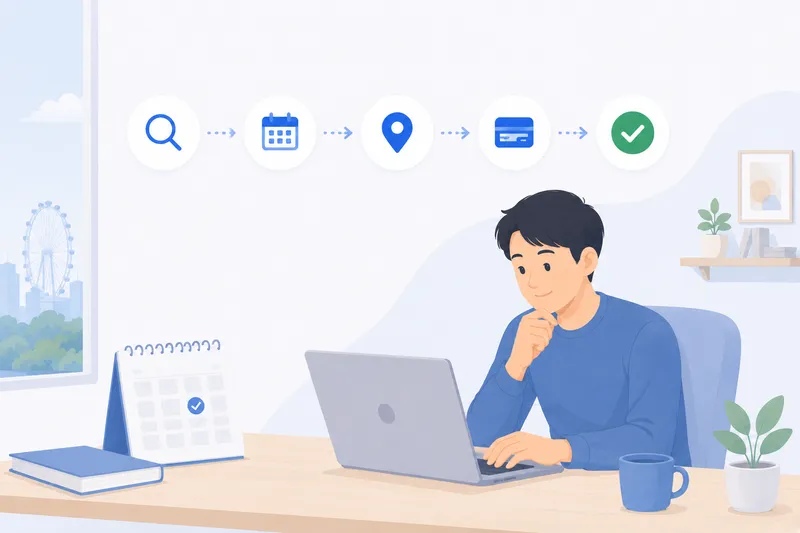
Moving Your Bookings Online: A Step-by-Step Guide for Service Businesses
A practical, vendor-neutral walkthrough for moving a service business from phone, DM and manual bookings to online self-service — step by step, low-risk.
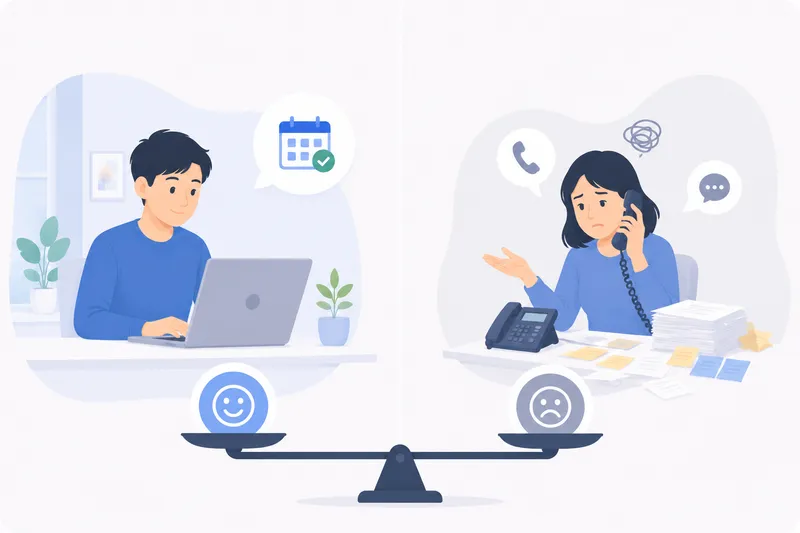
Online Booking vs Phone & DM Bookings: The Real Cost
An honest look at taking bookings by phone, DM and walk-in versus a self-service online page — the hidden costs, where each wins, and how they fit together.
Ready to fill every slot?
See how BooknGo keeps your calendar full and your admin on autopilot.