
Fitness Class Booking System Singapore
How Singapore yoga, Muay Thai, dance, and Pilates studios fill classes and retain members with online booking, automated WhatsApp reminders, and native PayNow.
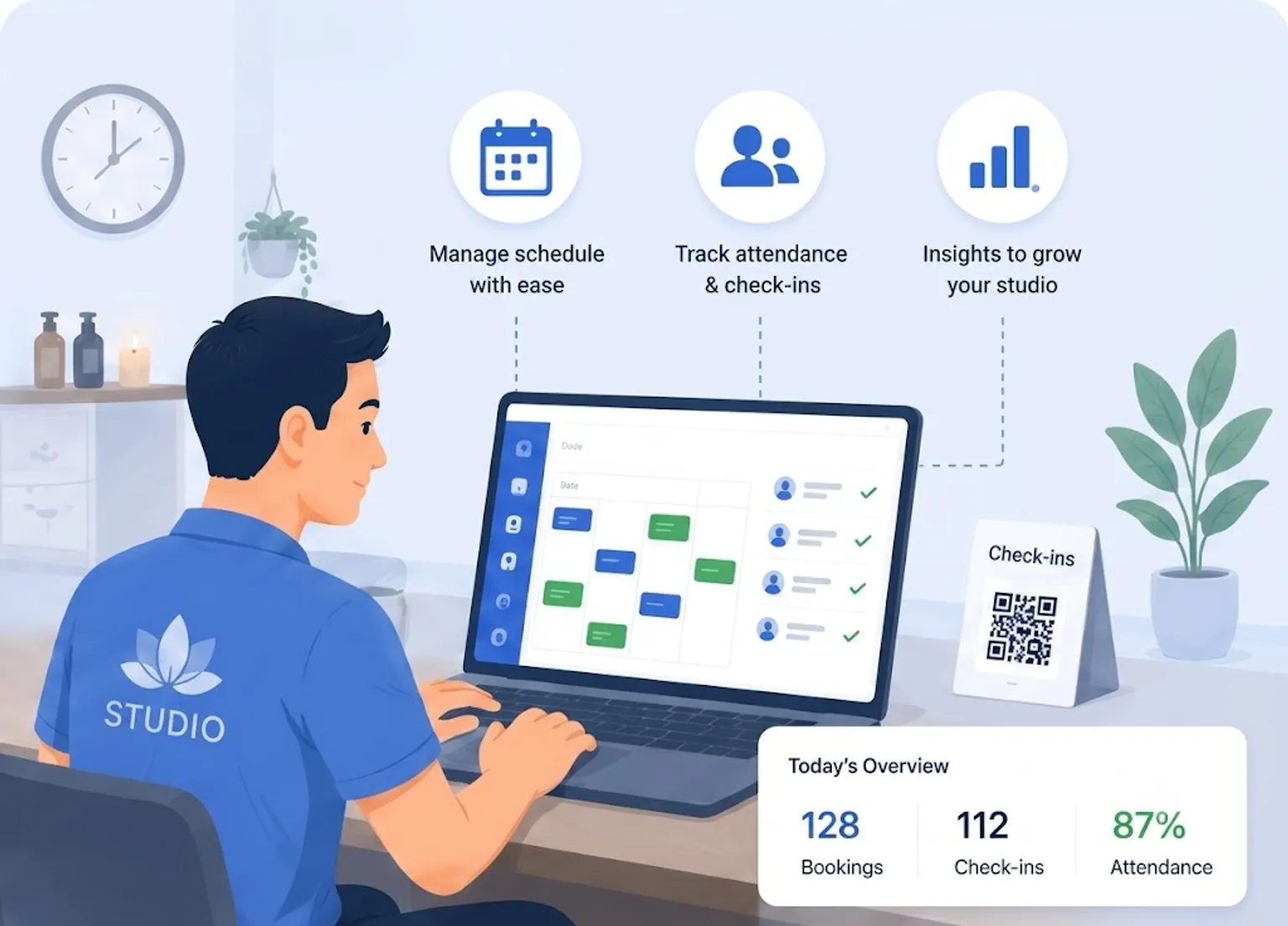
The Complete Guide for Gyms, Yoga Studios, Muay Thai, Dance, Pilates & Personal Training (2026)
TL;DR
The best fitness class booking system for Singapore studios lets members book classes online 24/7, sends automated WhatsApp reminders, manages memberships and class passes automatically, and accepts PayNow at checkout. BooknGo is built in Singapore for fitness studios — covering yoga, Muay Thai, dance, Pilates, boxing, personal training, and gym membership management, with no marketplace and no commission on your revenue.
The Singapore Fitness Industry in 2026
Singapore’s fitness industry has shifted significantly over the past three years. Large, traditional gym chains are losing members to smaller, specialised studios. Boutique fitness is outpacing commercial gym memberships across every major segment — yoga, Pilates, Muay Thai, functional fitness, dance — because members today want more than access to equipment. They want scheduled classes, instructor relationships, and a consistent community. They also want to book on their phone at 11pm, pay instantly via PayNow, and receive a WhatsApp reminder before every session.
Boutique Studios Are Taking Market Share
The growth of boutique fitness in Singapore is structural, not cyclical. Members are choosing smaller, class-based studios over traditional gyms at an accelerating rate. Yoga studios, Pilates reformer classes, Muay Thai gyms, and functional fitness facilities are filling schedules at a pace that large commercial operators cannot match. The drivers are consistent: smaller class sizes mean better instruction, fixed class times create habit and accountability, and studio communities retain members in a way that open gym access cannot.
This growth is also driving a new set of operational demands. A boutique studio running ten or more classes a week, managing class passes and monthly memberships across fifty to two hundred active members, cannot operate sustainably on WhatsApp bookings and spreadsheet tracking. The studios that are growing fastest are the ones that have moved their booking and member management online — freeing owners and staff to focus on coaching and member experience rather than admin.
According to Sport Singapore’s National Sports Participation Survey, regular sports participation among Singaporeans grew from 54% in 2015 to a record high of 74% in 2022 — one of the highest rates in Asia. Boutique fitness has driven a significant share of this growth, with smaller class-based studios consistently outpacing commercial gym membership growth across the region. The Southeast Asia boutique fitness segment continues to grow at a strong pace, with Singapore among the highest per-capita fitness spenders in the region.
How Singapore Members Book Fitness Classes Today
Member behaviour has changed. The average Singapore fitness studio member is mobile-first: they discover studios through Instagram, book via a link in a WhatsApp group or Instagram bio, pay by PayNow, and expect a confirmation message within seconds. They book last-minute — often the same day, sometimes the evening before. They cancel via WhatsApp. They expect an automated reminder before class.
Open rates for WhatsApp messages in Singapore exceed 90%, compared to under 30% for email. A studio still relying on email confirmations and reminders is communicating through a channel that most members check infrequently — which directly translates into higher no-show rates and lower class attendance consistency.
The Revenue Challenges Facing Singapore Fitness Studios
Fitness studio revenue leakage in Singapore comes from three consistent sources: no-shows, unused capacity, and membership churn. No-shows represent classes that were paid for but not attended — or worse, classes that were booked but not paid for, leaving a spot empty that could have gone to a paying member. Unused capacity occurs when a class fills up, members cancel last minute, and the resulting open spots go to waste because there is no automated system to offer them to the waitlist. Membership churn happens silently: a member who attended twice a week in January attends once a week in February and not at all by March, and nobody notices until the membership renewal comes up and they decline.
Each of these revenue challenges has a direct solution in fitness class booking software. The question for studio owners is not whether to move to a digital booking system, but which system is built for the way Singapore fitness businesses actually operate.
The numbers are measurable. Studios without automated reminder systems consistently report meaningful no-show rates across their class schedules. For a studio running 20 classes a week at 10 members per class, even a modest no-show rate represents significant empty capacity per week — bookings that were confirmed but not used. Studies on fitness booking automation consistently show no-show rates dropping by up to 40% when automated WhatsApp reminders are introduced (BooknGo platform data). Membership churn follows a similar pattern: studios that send automated expiry reminders via WhatsApp retain members at materially higher rates than studios relying on members to self-renew.
What Singapore Fitness Studio Owners Are Actually Dealing With
The operational challenges across fitness studios in Singapore — yoga, Muay Thai, dance, Pilates, CrossFit, boxing, personal training — are remarkably consistent. The details differ, but the underlying friction is almost always the same.
The WhatsApp Booking Problem
Most fitness enquiries in Singapore come through WhatsApp or Instagram DMs. A potential member messages asking whether there is space in Friday’s yoga class. You check your schedule, reply, they confirm, and you manually add them to the list. Twenty minutes later, someone else asks the same question. By the time a third person asks on a Saturday evening, you are not checking your messages.
Every booking that goes through WhatsApp is a booking that requires your time and attention. For a studio running ten or more classes a week, this adds up to hours of admin per week — hours that could be eliminated entirely with an online booking system that handles member sign-ups and class confirmation automatically.
Based on our experience working with Singapore fitness and wellness businesses, the most common trigger for switching to a digital booking system is not a single crisis — it is the slow accumulation of hours spent managing bookings on WhatsApp while simultaneously teaching classes, running payroll, and handling memberships. The breaking point is usually a week where a studio owner realises they spent more time on admin than on the floor.
Classes That Fill Up — and Still Have Empty Spots
A class reaches its maximum capacity and you stop accepting bookings. Two days before the session, three members cancel. The class now has empty spots — but the people on your informal waiting list have already made other plans because nobody contacted them. The spots go to waste.
A fitness class booking system with an automated waitlist solves this completely. When a cancellation comes in, the next person on the list is notified instantly and offered the spot. Your classes fill to capacity consistently, without your team making a single call. Late cancellation penalties — applied automatically when members cancel within the configured window — also reduce last-minute drops and protect class revenue.
Members Who Drift Away Without Anyone Noticing
A gym membership or class pass gives members flexibility — which also makes it easy for them to quietly stop coming. A member who was attending twice a week in January starts coming once a week in February, then not at all by March. No one notices until their membership renewal comes up and they decline.
Early visibility into attendance patterns — which members are coming less frequently, whose class pack is about to expire — gives you the chance to reach out before they disappear. Good gym management software surfaces this data automatically, and sends expiry reminders to members via WhatsApp before their package runs out. Members who lapse and then come back are harder to retain than members who never lapse at all.
The Hidden Cost of Manual Reminders
Sending a WhatsApp reminder to every member before their class takes about two minutes per message. Across twenty classes a week with ten members each, that is two hundred messages — roughly six hours of staff time per week that delivers zero revenue. The same reminders, sent automatically through fitness studio class management software, take zero staff time and consistently reduce no-shows by up to 40%.
For studio owners managing daily operations on their own or with a small team, automated communications and enhanced member management are not nice-to-have features. They are the difference between running a studio and running a studio sustainably.
BooknGo automates bookings, WhatsApp reminders, and membership management for Singapore fitness studios. Request a demo →
How a Fitness Class Booking System Solves These Problems
A fitness class booking system — also called gym scheduling software, gym management software, or fitness studio management software — is a platform that moves your entire class schedule and membership management online. For personal training businesses, martial arts schools, boutique fitness studios, and yoga studios alike, the shift from manual to digital gym management transforms daily operations. The table below shows what changes when studios make that move.
| Area | Manual Booking | Booking Software |
|---|---|---|
| Booking | WhatsApp or phone call | Online 24/7, any device |
| Capacity | Tracked manually or on spreadsheet | Real-time, auto-enforced |
| Waitlist | Informal, easily missed | Automated — notified instantly |
| Reminders | Sent manually per member | Automated WhatsApp + SMS + email |
| Payment | Collected at door or via bank transfer | PayNow at point of booking |
| Packages | Punch cards or spreadsheet tracking | Auto-deducted, balance visible to member |
| Attendance | Written register or memory | Dashboard with full class history |
| No-shows | High without reminders | Reduced up to 40% with reminders |
| Admin time | Several hours/week | Significantly reduced |
| Revenue leakage | High — missed renewals, unused capacity | Low — automated retention touchpoints |
24/7 Online Class Booking
Members access your studio’s booking page — from your website, Instagram bio, or a link in your WhatsApp group — and book themselves into classes without any involvement from your team. No app download required. No account creation friction. Any device, any browser. Members in Singapore book fitness classes primarily in the evenings and late at night — a studio that only accepts bookings during business hours misses a significant share of its potential class revenue.
Automated Waitlists and Capacity Management
Every class on your timetable shows real-time availability. When a class reaches maximum capacity, it automatically moves to a waitlist. Members who cannot get into a class join the waitlist with one tap — and are notified instantly if a spot opens. This prevents double bookings entirely and turns cancelled spots into filled seats automatically, at no administrative cost.
WhatsApp, SMS, and Email Reminders
The moment a booking is made, an automatic confirmation goes to the member via WhatsApp, SMS, and email. Before the session, automated reminders go out at timings you configure: 24 hours before, 2 hours before, or both. Members who cannot attend respond to the reminder, giving you advance notice and time to offer their spot to the waitlist. Platforms like Google Calendar and Outlook can sync directly with booking confirmations so members always have class times in their personal calendar.
One pattern we see consistently across Singapore fitness studios: the biggest operational gains come not from the booking interface itself, but from eliminating the manual follow-up loop. Studios that remove manual reminder workflows typically reclaim four to eight hours of staff time per week — time that goes directly into coaching, member relationships, and studio growth. For a solo studio owner, that reclaimed time is often the difference between a sustainable business and burnout.
PayNow at the Point of Booking
Members pay for their class, drop-in session, or class pack at the time of booking — via PayNow, credit card, or by redeeming sessions from an existing package. Collecting payment upfront gives the booking financial weight: members who have paid are significantly less likely to no-show or cancel without notice. PayNow processed over 1.2 billion transactions in Singapore in 2025 — it is the default payment method for the majority of Singapore residents, and a booking system that does not support it natively creates unnecessary friction at checkout. Integrating local payment options like PayNow also significantly lowers transaction fees compared to traditional credit card payment processing — a meaningful cost saving for fitness studios processing hundreds of transactions per month.
Membership and Class Pack Management
Monthly memberships, unlimited plans, 10-class packs, and drop-in rates should all be manageable from the same system, with balances tracked automatically. A member trying to book on a lapsed membership is prompted to renew before the booking goes through. When a class pack is running low, an automated message five days before expiry — sent via WhatsApp — prompts renewal before the habit of attending is broken.
For studios comparing options, a number of established international gym management platforms offer solid membership and scheduling features for gym operations, though most are not built around Singapore-specific requirements like PayNow and WhatsApp. Capterra’s Singapore Fitness Software Directory provides pricing comparisons and local reviews for studios evaluating options.
Want to see how membership tracking and automated renewals work in practice? Request a demo →
Additional Features for Day-to-Day Studio Operations
Beyond booking and payments, good gym management software handles: digital waivers and health declarations captured at sign-up; check-ins and access control at the door; workout tracking and class attendance history for members; marketing automation including re-engagement sequences for members who stop attending; and multi-instructor scheduling where each trainer manages their own availability while studio owners see everything in one dashboard.
Branded Booking Page and Member Experience
The best gym management software solutions are cloud-based, allowing gym operators and members to access everything online without complex local installations. A mobile-optimised booking page keeps gym members engaged with your fitness space and brand. Custom branding options let studios personalise their booking page with their logo and colours. Gym members access the page directly from your existing website, Instagram bio, or a WhatsApp link — on any device, no app download required. They browse available class times, book sessions, reserve classes, view their class history, and manage their membership from their phone.
Real-Time Reporting and Business Dashboards
A modern fitness business runs on data. Real-time dashboards help gym owners track peak hours and class fill rates, allowing for better scheduling and marketing strategies. Good gym management software generates reports on attendance trends, membership growth, revenue streams, class performance, and member retention — giving gym operators the visibility they need to make decisions quickly. For multi-location studios, dashboards aggregate data across all sites so owners can compare performance, manage daily operations, and identify scheduling gaps without pulling data manually from each location.
Billing Management, Automated Payments, and Retail Sales
Automated billing is a key feature of reliable gym management software. Monthly memberships are charged automatically on renewal dates; failed payments trigger a follow-up sequence so revenue is recovered without manual chasing. Class packs and drop-in sessions are processed at point of booking. For studios selling merchandise or supplements, retail sales can be managed through the same gym management system as memberships and class bookings — consolidating revenue streams into a single reporting dashboard rather than managing separate point-of-sale tools.
Access Control and Door Management
Gyms operating in Singapore increasingly integrate booking systems with hardware for access control. QR code-based entry and NRIC verification allow members to check in at the door without staff intervention, restricting access to members with active memberships automatically. For fitness facilities running early morning or late evening sessions without front desk coverage, automated door access removes the operational dependency on staff being present for every class. Access control data also feeds into attendance tracking, giving studio owners an accurate picture of actual class usage rather than relying on manual registers.
Booking Systems for Different Types of Fitness Studios
Singapore’s fitness industry is genuinely diverse. The scheduling needs of a yoga studio differ from a Muay Thai gym, which differ again from a dance studio or personal training business. A good fitness class booking system adapts to each format rather than forcing every studio into the same structure.
Yoga Studios
Yoga studios typically run multiple class formats at different levels — Hatha, Vinyasa, hot yoga, yin, restorative — often with several teachers each running their own schedule. Yoga studio booking software needs to handle capacity limits per room, teacher-specific schedules, class pass and membership redemption, and automated reminders. Drop-in rates, 10-class passes, and monthly unlimited memberships should all be manageable from the same system with balances tracked automatically.
Muay Thai, Boxing, and Martial Arts Gyms
Muay Thai class booking in Singapore has specific characteristics: many gyms run open mat sessions alongside structured classes, members often book same-day, and capacity matters for safety. Martial arts class booking software needs real-time capacity enforcement, easy same-day booking, and waitlist management for popular sessions. Boxing class scheduling follows similar patterns — boutique boxing studios often run small-group sessions that sell out quickly, and the waitlist and reminder system directly affects revenue.
Dance Studios and K-Pop Dance Classes
Dance studio class booking in Singapore has grown significantly, driven in part by the continued popularity of K-pop. Classes are structured around skill levels and routines, with members booking specific sessions rather than open drop-ins. The key conversion challenge is the trial class: an automated follow-up message after the first session — sent without any staff involvement — is one of the highest-leverage tools available to a growing dance studio.
Pilates, Barre, and Wellness Studios
Pilates booking in Singapore and barre class scheduling share a common profile: small class sizes, premium pricing, and a loyal regular base. For these wellness businesses, membership and package management features matter as much as class booking. Members on monthly packages need sessions tracked accurately. When a package is running low, an automated renewal reminder via WhatsApp is the difference between a retained member and one who quietly lapses.
Personal Training Studios
Personal trainer booking apps in Singapore serve boutique PT studios with multiple trainers and individual PTs managing their own client base. The key requirement is 1-on-1 session management — each trainer’s availability is separate, clients select their preferred trainer, and sessions are confirmed with payment upfront. An automated sequence handles confirmation, reminder the day before, and follow-up after the session to rebook.
CrossFit Boxes and Functional Fitness Studios
CrossFit boxes and functional fitness studios run a programming model where members book into specific sessions — the 6am WOD, the 12pm class, the 6pm strength session. Capacity is strictly managed, attendance is tracked, and the community aspect means members often book as a group. Fitness studio class management software needs strong attendance tracking and the ability to communicate schedule changes through the same notification channels used for booking reminders.
Why Studio Owners Are Moving Away From Marketplace Platforms
Many Singapore fitness studios first built their member base through aggregator platforms — services that list multiple studios and let users browse and book across them. These platforms offer genuine exposure for new studios trying to reach members who do not yet know them. But as studios grow, the economics and strategic implications of marketplace platforms become increasingly problematic.
Your Members See Your Competitors Every Time They Book
When a member opens an aggregator app to book your yoga class, they are simultaneously shown every other yoga studio in their area — listed by price, availability, and rating. Your studio is competing for attention on your own booking confirmation screen. The platform’s interest is in keeping users on the platform, not in building loyalty to any individual studio. Every booking made through an aggregator is a booking that could have gone to a competing studio instead.
Direct booking removes this entirely. A member who books through your studio’s own page sees only your classes, your instructors, and your pricing. There are no competing listings, no alternative suggestions, and no platform incentives pulling them toward other studios.
You Do Not Own the Member Relationship
On marketplace platforms, the member relationship belongs to the platform, not the studio. Contact details are controlled by the platform. Communication goes through the platform. When a member stops using the platform, they stop attending your studio — even if they would have continued booking directly. Studios that build their member base through direct booking own that relationship entirely: contact details, booking history, attendance patterns, and the communication channel.
Commission Leakage Compounds Across Every Transaction
Marketplace platforms typically charge a combination of platform fees and payment processing fees that together reduce the revenue reaching your studio. These costs compound quickly across a month of class bookings and membership renewals. The total percentage leaving each transaction — covering platform margin, payment gateway fees, and sometimes member-side discounting — is a predictable cost for studios just starting out, but becomes harder to justify as your direct member base grows and the exposure value of the platform diminishes.
Studios using BooknGo pay a flat subscription fee. There is no commission on class revenue, no deduction from PayNow transactions, and no per-booking charge on memberships. What your members pay goes directly to your studio, with predictable monthly costs that are easy to model as your business grows.
Brand Ownership and Long-Term Member Loyalty
Members who book directly with your studio — through your branded booking page, with your logo, your class list, your pricing — are building a relationship with your brand. Members who book through an aggregator are building a relationship with the aggregator. Direct booking consistently produces higher retention rates, higher membership renewal rates, and higher lifetime member value than aggregator-sourced members — because the loyalty is to the studio, not the platform.
Why BooknGo
Most fitness booking software available in Singapore was built for the US or Australian market. The product works technically — but the assumptions built into it do not match how Singapore fitness businesses operate or how Singapore members pay and communicate.
Built in Singapore, for Singapore Fitness Businesses
BooknGo is built and supported in Singapore. Every feature reflects how Singapore fitness businesses actually operate. Here is why Singapore studios choose BooknGo over international platforms:
- No marketplace — your booking page shows only your studio, your classes, your pricing. Members never see competing studios.
- No commission — flat monthly subscription; PayNow revenue goes directly to you with no percentage taken per booking or membership.
- Native PayNow — built in from day one, not added as a third-party integration.
- Native WhatsApp reminders — booking confirmations, class reminders, and expiry alerts included as standard.
- PDPA compliant by default — consent capture, secure cloud hosting, and encrypted payment processing aligned with Singapore data requirements.
- Singapore support — local team, Singapore time zone.
- Multi-location ready — one dashboard across all your studios with location-level reporting.
- GST-compliant receipts — generated automatically for every transaction.
Fitness Booking Software vs Fitness Studio Management Software: What’s the Difference?
The terms “fitness booking software” and “fitness studio management software” are often used interchangeably — but they describe different scopes of functionality, and the distinction matters when you are evaluating platforms.
Fitness Booking Software
Fitness booking software handles the transaction layer: a member selects a class, books a spot, pays, and receives a confirmation. It manages class capacity, waitlists, and basic scheduling. This is the minimum viable system for a studio that wants to move bookings off WhatsApp. Most entry-level platforms in the market — including free tools — operate at this level.
Fitness Studio Management Software
Fitness studio management software goes beyond booking to cover the full operational lifecycle of a studio: member management, membership and package tracking, attendance records, staff and instructor scheduling, revenue reporting, marketing automation, check-ins, digital waivers, and retention tools. The best gym management software for Singapore studios connects all of these functions in a single dashboard rather than requiring separate tools for each.
Why the Distinction Matters for Singapore Studios
Studios that start with booking-only software often find themselves adding manual processes for everything else: spreadsheets for membership tracking, separate WhatsApp broadcasts for reminders, manual PayNow reconciliation. The total admin overhead ends up higher than expected because the tools do not connect. A platform that handles both booking and studio management from day one — like BooknGo — eliminates these gaps by design.
Key features to compare when evaluating gym management software include: membership management, class scheduling, billing automation, attendance tracking, reporting dashboards, marketing features, and user experience for both gym operators and members. The right gym management software connects all of these in one platform — eliminating the overhead of managing separate tools for booking, payments, and member communications. The best gym management software for Singapore fitness studios is cloud-based, mobile-optimised, and built around local payment and communication channels from day one. When evaluating options, the right question is not “does it handle bookings?” but “does this gym management system handle everything a Singapore fitness facility needs to run — including PayNow, WhatsApp, PDPA, and membership management — without requiring additional tools?”
How Much Does Fitness Booking Software Cost?
Pricing for fitness class booking software varies widely. Basic gym management platforms start at $0 per month for very small studios with limited features, while full-featured systems for larger gym and fitness studios range from $50 to $500 or more per month. Many platforms use tiered pricing models based on the number of active clients or features included, allowing wellness businesses to scale their costs with their growth. Some platforms also charge per-booking fees or take commission on transactions — costs that compound quickly for a studio with high booking volume.
BooknGo charges a flat monthly subscription. No commission. No per-booking fees. No enterprise pricing surprises. For studios evaluating options, Capterra’s Singapore Fitness Software Directory provides pricing comparisons and localized reviews from gym owners across the region.
Most gym management software providers offer a free trial or demo period so gym owners can evaluate the platform before committing to a subscription. This is the right way to assess whether a gym management solution fits your studio’s workflow — test the class scheduling, run a membership through the booking flow, check that PayNow and WhatsApp work as expected. BooknGo offers a demo for Singapore fitness studios to see the full platform in action before signing up.
Frequently asked questions
What is a fitness class booking system?
It is a platform that moves your class schedule and membership management online. Members book classes 24/7 from any device, capacity and waitlists are auto-enforced, payments are collected at booking, and reminders go out automatically without staff involvement.
How does an automated waitlist help fill empty class spots?
When a class hits capacity it moves to a waitlist members join with one tap. If someone cancels, the next person is notified instantly and offered the spot — turning cancelled seats into filled ones automatically, without your team making a single call.
Why does PayNow matter for a Singapore studio's booking system?
PayNow is the default payment method for most Singapore residents, so a system without native support adds checkout friction. Collecting payment upfront also makes members far less likely to no-show, and PayNow lowers transaction fees versus credit-card processing.
How much does fitness booking software cost?
Pricing varies widely — basic platforms can be free for tiny studios, while full-featured systems run roughly $50–$500+/month, often with per-booking fees or commission that compounds with volume. BooknGo charges a flat monthly subscription with no commission or per-booking fees.
Why are studio owners moving away from marketplace platforms?
Aggregators show members competing studios on the booking screen, own the member relationship and contact details, and stack platform plus payment fees on every transaction. Direct booking through your own branded page keeps the relationship, data, and revenue with your studio.
Related articles
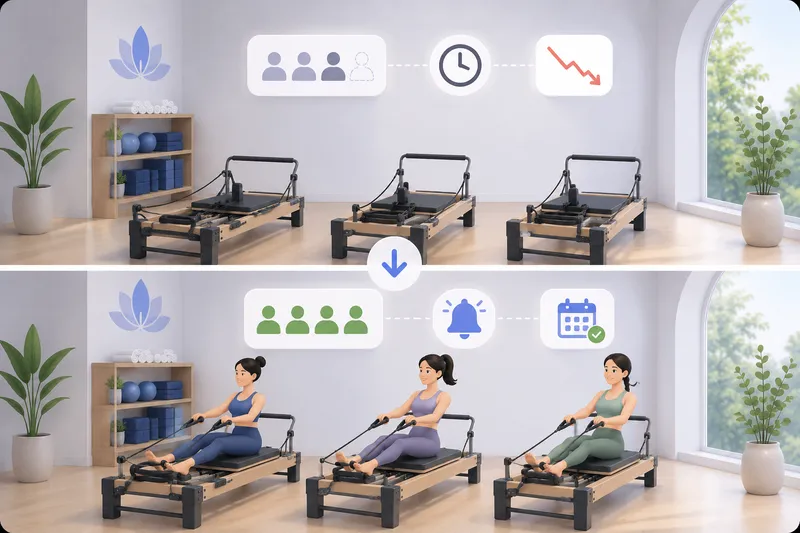
Best Pilates Studio Software in Singapore (2026): Stop Losing Revenue to Spreadsheets
Compare the best Pilates studio software for Singapore in 2026 — BooknGo vs Mindbody, Acuity, Momence — with PayNow, WhatsApp reminders, and class pack management built in.
Fill every class, automatically.
See how gyms and studios run class schedules, memberships, and waitlists on BooknGo.