
Gym Membership Management Software: Managing Your Gym Calendar the Smart Way During Peak Hours & Capacity Limits
Optimize peak hours and capacity with gym member management software. Improve scheduling, reduce crowding, and enhance member experience.
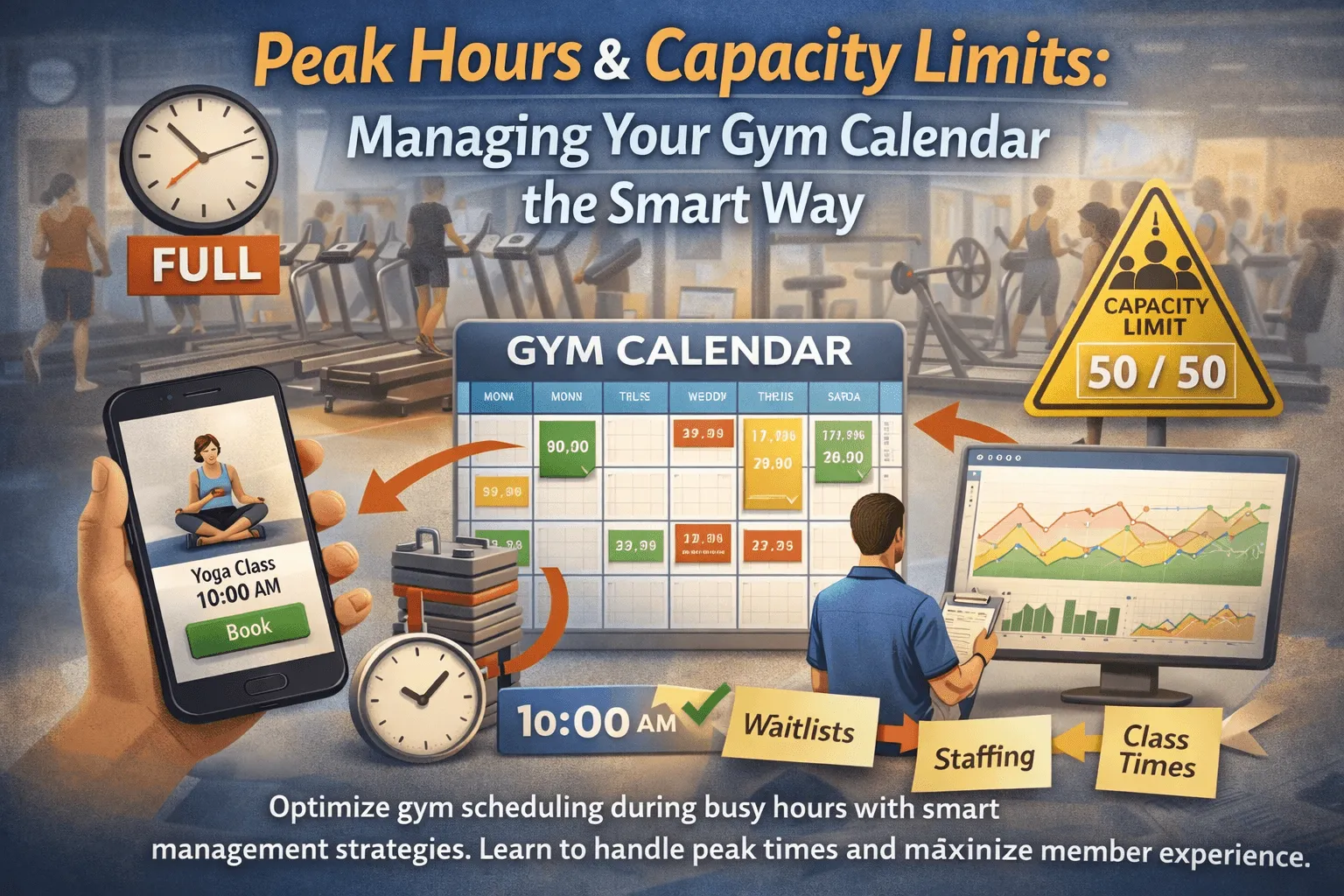
Every gym owner knows too well: It’s 6:03 p.m. The treadmills are full. The squat rack queue looks like a simmering revolution. A new member walks in, scans the room, and suddenly, recalculates their life choices.
Peak hours aren’t just about volume. They’re about experience. And experience is what keeps members renewing.
Managing your gym calendar intelligently is no longer optional. It’s fundamental. With the right gym member management software, scheduling stops being reactive and starts becoming strategic. Its robust schedule management capabilities streamline scheduling tasks, making team organization and club coordination much easier. The software is user-friendly, featuring an intuitive design that ensures even non-tech-savvy gym owners can manage bookings, memberships, and other functions with ease.
As a comprehensive solution, it covers all aspects of gym operations, including membership management, bookings, payments, and access control—not just scheduling. The result is not just smoother traffic flow. It’s higher retention, steadier revenue, and a facility that doesn’t feel chaotic.
Peak hours are predictable. Chaos is optional.
Every gym operates on rhythms. Early mornings pull in professionals before work, evenings fill with members unwinding after long days, and weekends create their own social surge.
None of these patterns are random. They are behavioral.
What creates stress is not the spike itself, but the absence of visibility. Strong gym membership management software tracks check-ins, bookings, cancellations, and attendance trends by hour and day. It also helps gym owners track progress of their members over time, making it easier to monitor individual advancement and development.
Within weeks, clear patterns emerge. You see which slots consistently hit capacity and which remain underused. The software provides performance metrics that allow gym owners to analyze member activity and operational efficiency, supporting data-driven decisions.
Once the pattern is visible, the calendar becomes something you can shape rather than chase.
Capacity limits are not barriers. They are boundaries.
Unlimited access during high-demand hours sounds generous. In practice, it often dilutes the member experience. Capped class sizes help maintain a premium feel, but efficiently managing group classes and class scheduling is also crucial as streamlining these processes can significantly enhance member satisfaction.
When structuring your calendar, scheduling classes strategically is essential to avoid congestion and improve flow throughout the facility.
Overcrowding erodes value
Overcrowding rarely causes an immediate revolt. It builds slowly. A member waits five extra minutes for a bench. A class feels tighter than usual. A trainer seems rushed. These moments alone do trigger cancellations. But repetition compounds frustration. The perceived value of membership drops when access feels competitive rather than collaborative.
Boundaries protect safety and performance
Capacity limits are not merely about comfort. They intersect with safety, equipment lifespan, and overall performance quality. Fire codes, spacing regulations, and emergency access pathways exist for a reason. A packed free-weight area, for example, increases the risk of collisions and improper spotting.
Scarcity can increase perceived quality
There’s also a psychological layer worth noting. When class sizes are capped, the experience often feels more premium. Members also receive more individualized attention, which is particularly important for specialized programs.
Structure reduces friction
Perhaps the most underestimated benefit of capacity boundaries is the reduction of social friction. Without clear limits, members negotiate space informally. They hover near machines. They glance at each other to estimate wait times. They ask, “How many sets do you have left?” more often than they would prefer.
Now, what do you do? Here are some ways to manage pain points in your calendar.
1. Shift demand instead of absorbing pressure.
The smartest gyms don’t simply endure peak hours. They redistribute them. If evenings are overloaded, consider how to make off-peak hours more attractive, like midday membership tiers, targeted promotions for flexible schedules, or specialized classes placed outside rush windows.
With an integrated gym member management software, you can measure the impact of these strategies. You can see whether attendance shifts meaningfully from high-pressure windows to quieter ones.
Even small behavioral adjustments can dramatically improve overall flow. For example:
-
5 p.m. to 8 p.m. regularly operating near 95% capacity
-
12 p.m. to 3 p.m. averaging closer to 60%
-
Late mornings and late evenings below 40%
Data like this gives you leverage. Instead of guessing where to intervene, you act with precision.
2. Design your class calendar.
Stacking multiple high-intensity classes at the same hour may look productive, but it can concentrate demand around the same equipment and coaching resources. Congestion simply shifts location.
Instead, vary intensity levels across time slots. Distribute beginner and advanced sessions strategically. Rotate specialized programs so they do not compete for identical resources. Facilities offering combat-focused training benefit from dedicated boxing gym software that coordinates attendance limits and equipment usage in real time. That structure keeps sessions balanced and effective.
3. Align staffing with real attendance patterns.
Peak hours affect more than members. They shape staff workload. When front desk teams are overwhelmed and trainers are overextended, service quality suffers. Members may not complain immediately, but the experience shifts.
Advanced gym management software allows operators to align staffing schedules with attendance data. If Tuesday evenings consistently spike, additional coverage can be assigned. If Friday afternoons trend lighter, staffing can adjust responsibly.
Cleaning cycles and equipment checks can also align with traffic patterns. Proactive scheduling replaces reactive scrambling.
4. Use waitlists strategically.
When integrated into gym membership management software, cancellations automatically notify the next member in line. Spots are refilled quickly. Capacity is optimized without manual effort. This creates fairness and efficiency. Members see a system that works consistently, not one that depends on last-minute improvisation.
Member autonomy reduces friction
Modern members expect control: they book travel, food, and services digitally. Fitness should match that standard. Real-time booking visibility, instant reservations, and easy modifications reduce administrative friction. Strong gym member management software centralizes scheduling, billing, and attendance tracking in one ecosystem. Less friction in booking means more consistent attendance.
Data turns scheduling into strategy
Peak-hour management also informs growth decisions. If your facility consistently operates near full capacity during prime hours, that data signals opportunity. Additional equipment, expanded programming, or extended hours may be justified. Comprehensive reporting through gym management software transforms intuition into documented trends. Growth becomes strategic rather than impulsive.
Gym management software data turns scheduling into strategy
Peak-hour management also informs growth decisions. If your facility consistently operates near full capacity during prime hours, that data signals opportunity. Additional equipment, expanded programming, or extended hours may be justified.
Comprehensive reporting through gym membership management software transforms intuition into documented trends and provides valuable insights that inform strategic decisions. Advanced tools and comprehensive features within the software support robust reporting and analytics, making it easier to analyze performance data. Progress tracking features help monitor both member and gym development over time. Growth becomes strategic rather than impulsive.
Turning your calendar into a competitive advantage
The fitness industry is crowded. Boutique studios, hybrid memberships, and home workout platforms compete for attention.
A well-managed calendar is a strong differentiator. Not only because it protects experience during peak hours, but also because it aligns staffing, programming, and capacity limits with real behavior patterns, turning scheduling from administrative burden to growth asset.
The 6:03 p.m. rush may always exist. That energy is part of gym culture. But with structured capacity limits and data-informed planning, the atmosphere shifts. When members walk in during peak hours and find a space that feels organized, fair, and ready for them, the difference is subtle but powerful.
BooknGo’s gym member management software is designed to help fitness businesses take control of scheduling, attendance, and capacity without adding administrative stress. From real-time booking limits and automated waitlists to detailed attendance reporting, it gives you the data and structure needed to protect member experience during your busiest hours.
Request a demo today.
Frequently asked questions
How does gym membership management software help with peak-hour chaos?
It tracks check-ins, bookings, cancellations, and attendance by hour and day, so patterns emerge within weeks. You can see which slots consistently hit capacity and which stay underused — turning your calendar into something you can shape rather than chase.
Why should I set capacity limits on classes instead of offering unlimited access?
Unlimited access during high-demand hours dilutes the member experience, while capped class sizes keep a premium feel and give members more attention. Capacity limits also protect safety and equipment, and reduce social friction so members negotiate space less.
How can I ease congestion without simply enduring peak hours?
Redistribute demand rather than absorbing it. Make off-peak hours more attractive with midday tiers, targeted promotions, or specialised classes outside rush windows. With integrated software you can measure whether attendance actually shifts to quieter slots.
How do waitlists work in gym membership management software?
When integrated, a cancellation automatically notifies the next member in line, so spots refill quickly and capacity is optimised without manual effort. This creates fairness and efficiency — a system that works consistently rather than depending on last-minute improvisation.
How can scheduling data inform decisions about growing my gym?
Peak-hour data signals opportunity. If your facility consistently runs near full capacity during prime hours, that may justify more equipment, expanded programming, or extended hours. Reporting turns intuition into documented trends, making growth strategic rather than impulsive.
Fuller classes, happier parents.
See how kids' sports academies and gyms manage class capacity, passes, and parent reminders on BooknGo.